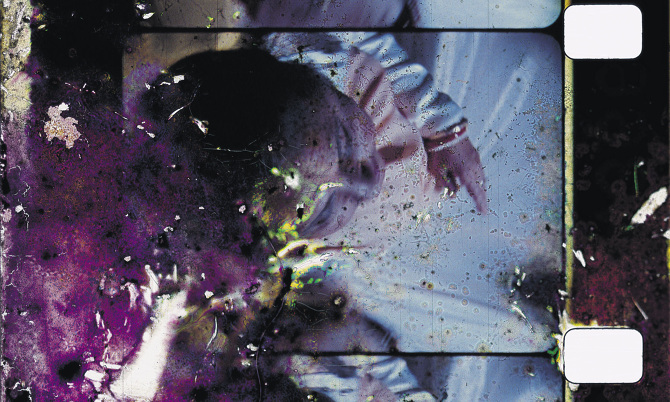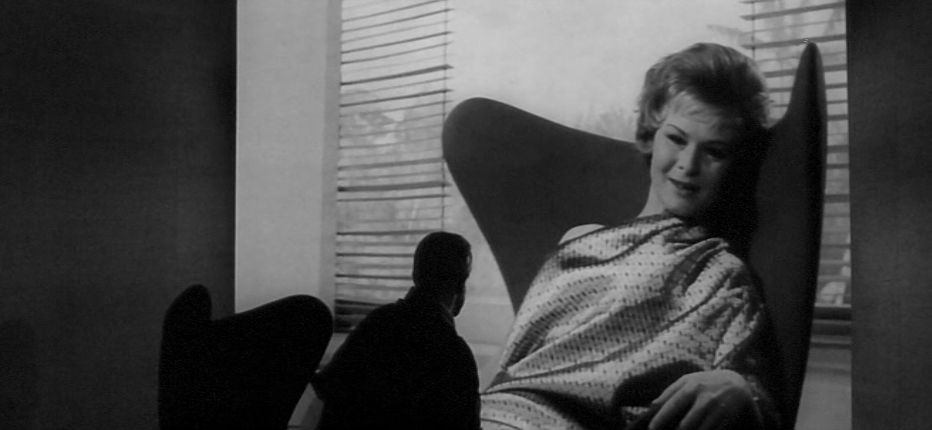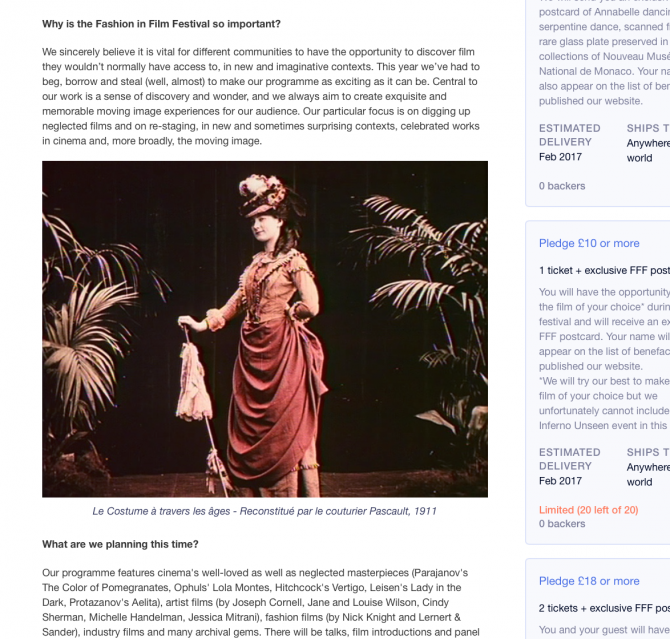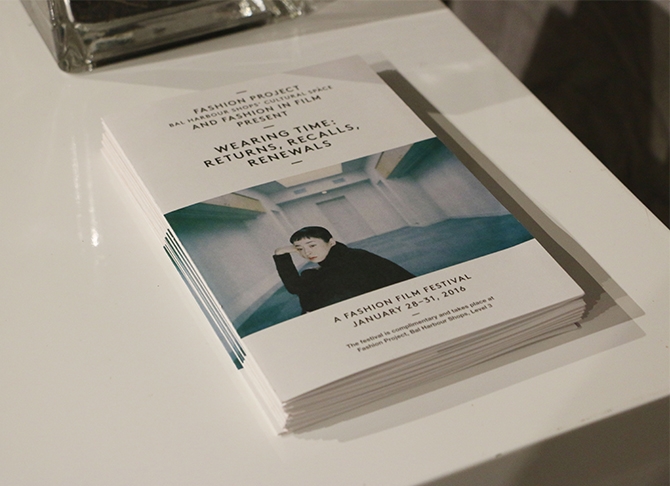

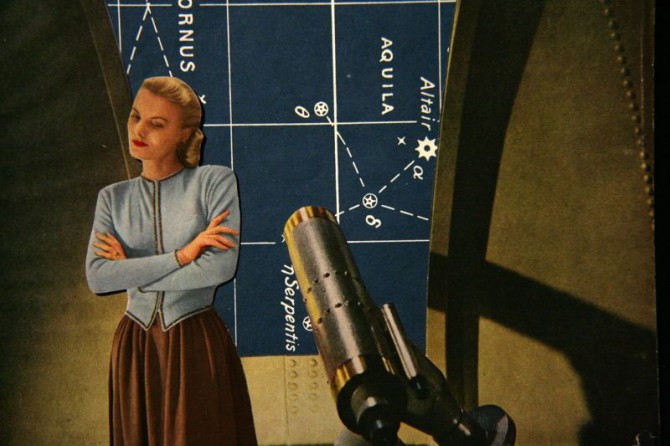
Read Marketa Uhlirova’s interview with collage artist Lewis Klahr (whom we featured in our last Miami festival in March 2019). It comes out of a private email conversation that was never intended to be published…
***
What draws you to all these old magazines and found objects that you use in your films? Is it partly the process of collecting?
No, I’m not a collector, though I clearly have some impulses in that direction. But I actually do the opposite of what collectors and archives do – they preserve, I acquire for their use value for my collaging and ultimately damage or destroy them.
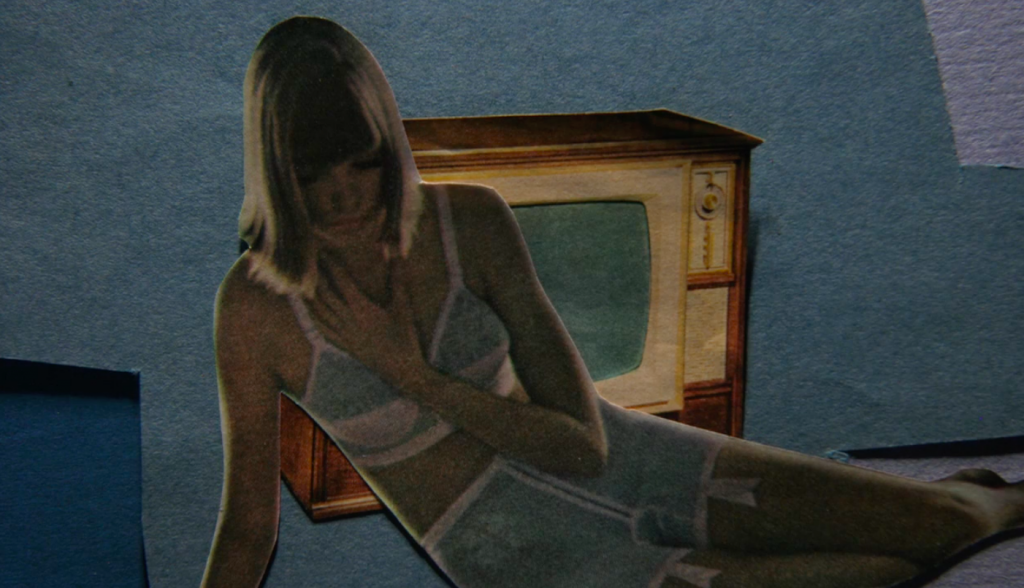
Does it have something to do with a kind of nostalgia (which I personally think of as a kind of longing but not one that carries wholly negative connotations)?
This has a lengthy answer of course but here are some summary ones: I’m interested in the pastness of the present. The most uncanny, inexplicable thing I have ever experienced is the difference between now and then. I am interested in describing lived time – one of my favorite type of films are films that tell time (like Max Ophuls’ Letter From An Unknown Woman). That is, films that portray large periods of time and the changes that occur between them. My films False Aging and The Nimbus Trilogy are good examples of my version of this. As for nostalgia, I think people often feel threatened by it because they think it means one is embracing some former era wholesale, with all its problems brushed and hidden under the rug. I know my personal sense of nostalgia is far more specific and limited than that. For instance, disappeared styles of design, like the way American cars looked in the mid-20th century, up to 1965, or the richly saturated colors found in magazine and comic book printing until around 1970 – all this activates my sense of nostalgic longing.
What do you think is in the past for us today?
The understanding of the present, knowledge of history. The present always contains trace elements of the past that hide in plain sight around us whether it’s a building, vintage clothes, a media conveyance system that is outmoded and then returns with a vengeance – vinyl records, for instance. Also, the past is constantly growing: it’s this sentence I just finished typing (and you reading)! I’m fascinated by the distinction or borderline of when something stops being defined as contemporary and is instead defined as past and outmoded.
There are so many wonderful moments within your films, and I admire the way you make something once so commonplace and trivial seem so strange and moody and even at times sinister.
Thanks for noticing! You are onto a key aspect of my version of the surreal – it has a strong dollop of pragmatism mixed in.

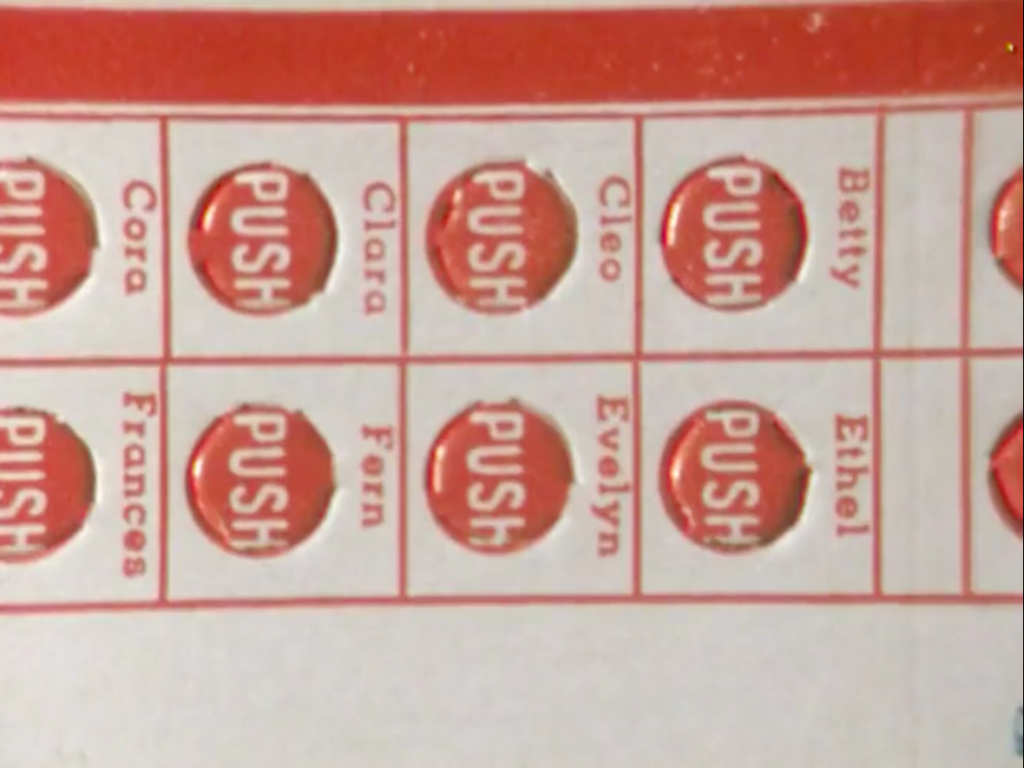
By the way, what is that sheet with women’s names and the PUSH signs in Elsa Kirk? I interpreted it as some kind of porn jukebox interface. Am I totally on the wrong path?
I love your interpretation of this! But no, it’s nothing that exotic or illicit. It was some kind of contest from the late ’50s, early ’60s in candy/newspaper stores where you paid to pick a girl’s name and the name was punched out – underneath the name revealed whether it was the winner. If it was, you received a prize. I bought it at the turn of the century, at the Rose Bowl thrift market in Pasadena which still runs every second Sunday of each month. In my film I used it to show that Elsa’s name wasn’t included. In the elliptical crime narrative I was telling, I meant it to reveal that Elsa had disappeared, escaped after successfully pulling off whatever seduction con scheme she was involved with that left the men clothed only in barrels.
 I think there is a wonderful way in which you create cinematic spaces from flat images and how the camera travels across the images to suggest stories/causes and effects. Do all the films have stories for you?
No, they don’t. In fact, my recently completed feature-length series Circumstantial Pleasures, which contemplates the current zeitgeist with contemporary images, isn’t at all narrative. But all the films I sent you do have very developed stories. I have of course a detailed sense of these stories, since I’m doing the telling but I’m very aware that they are open to interpretation due to how much exposition my storytelling omits. Only rarely do people “read” their stories the way I intended. I consider that to be ultimately a strength of the work that they are openly evocative of multivalent narratives.
To me, your films are studies of cinematic languages as much as anything (while also being these assemblages and collages of once-popular-culture).
I agree. But there are many ways to understand what my films are up to. Which brings to mind one of my favorite moments in Tourneur’s Out of the Past where late in the film, Robert Mitchum’s private detective character is employing a cab driver whom he doesn’t know and Mitchum speculates/thinks aloud about the nature of the trap he’s fallen into. The cabbie responds diplomatically, not interested in getting involved and concerned to keep his distance – “I always say everyone’s right.”
Lewis Klahr is an American collage artist working in the moving image. His films have been exhibited extensively in the United States and Europe, and collected by major museums, including the Museum of Modern Art.



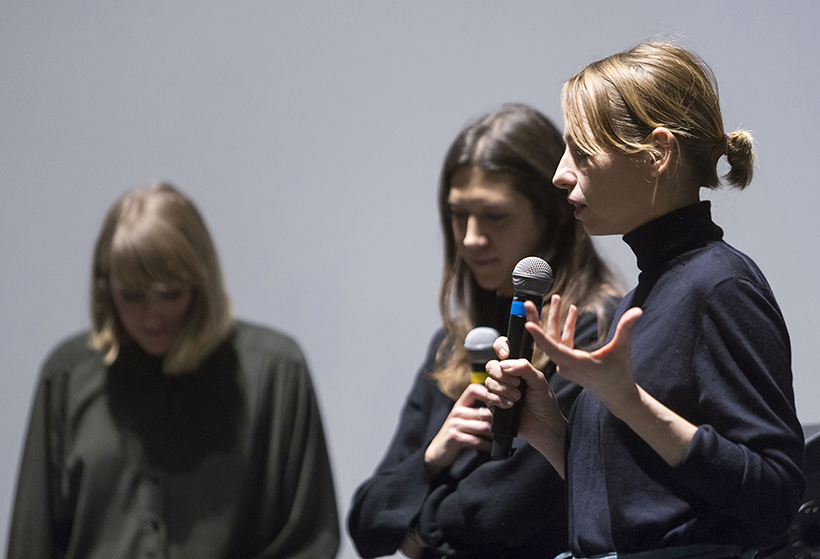
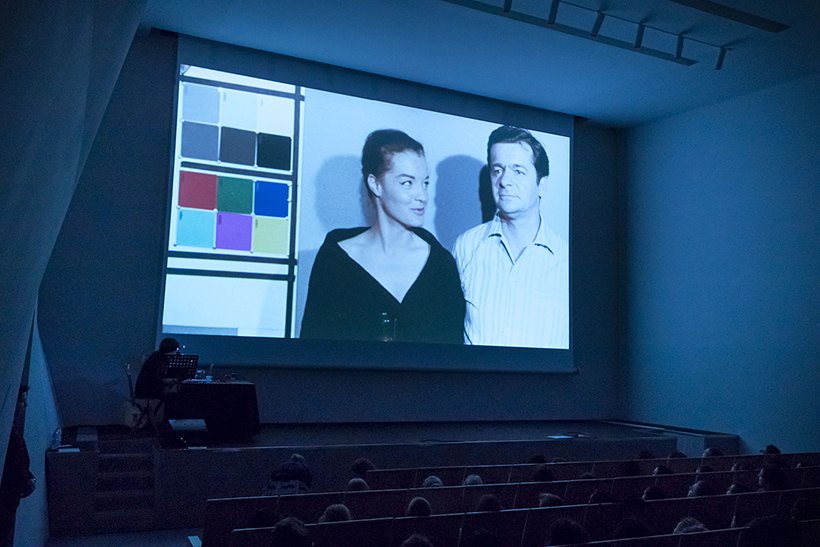
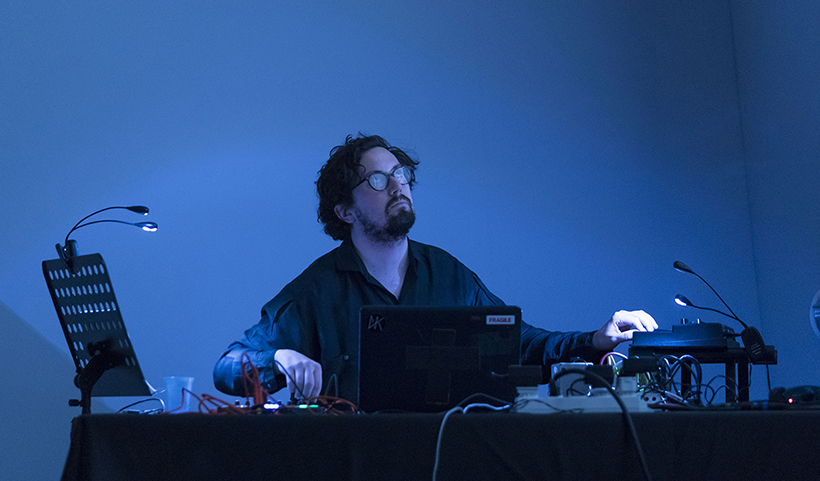
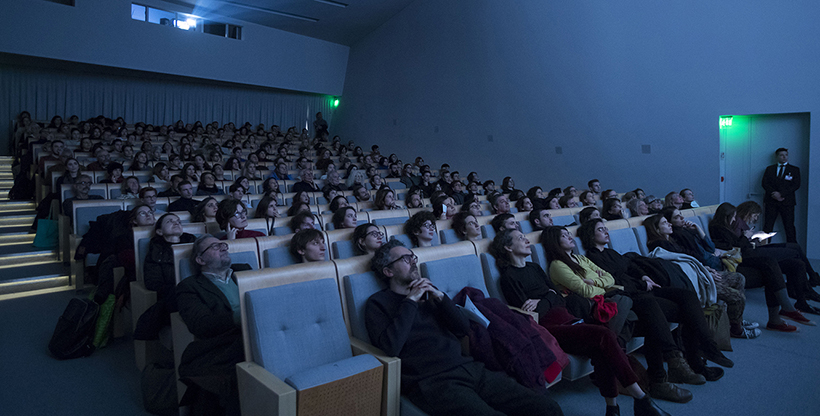

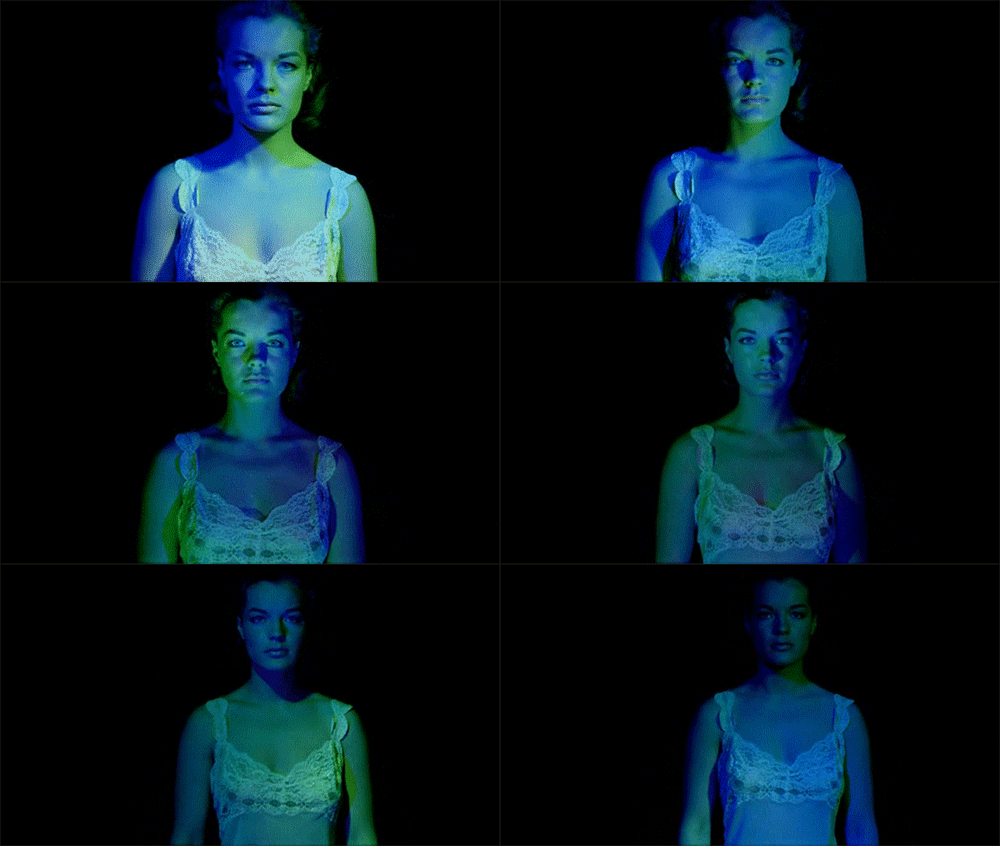

 1. The Inferno Unseen – I’ve seen some of this footage before but I am really looking forward to seeing it made into some kind of end-product rather being simply a collection of visually amazing screen-tests.
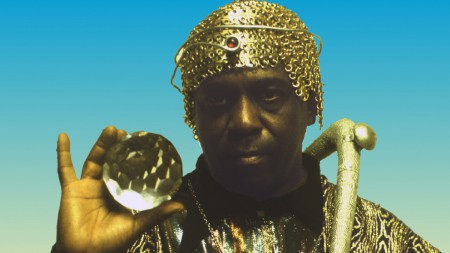 2. Space is the Place – This is one of those that I’ve heard a lot about over the years but have never actually seen. I’m a sucker for space-related films & music so this is a double-whammy for me!
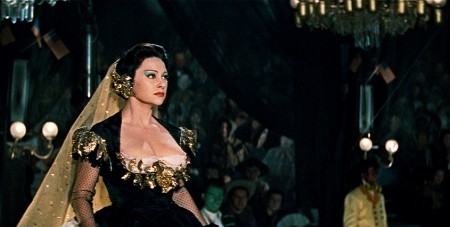 3. Lola Montes – Sophie Calle told me that this was maybe the best-looking film ever. Who am I to argue?
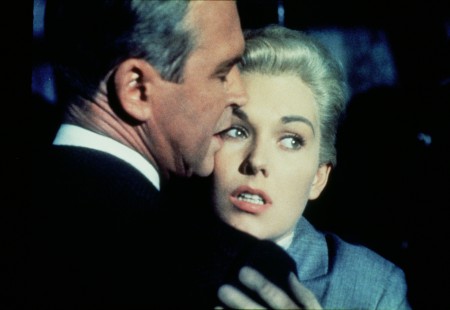 4. Vertigo – I’ve never seen it at the cinema. Some films are so powerful that you have to be careful how many times you watch them – but I reckon I could manage one more time…
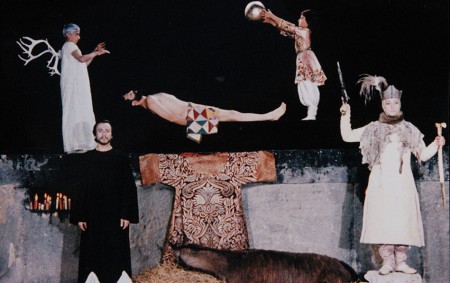 5. The Colour of Pomegranates – I’ve only ever seen stills from this – which looked intriguing enough to make me want to see the film they come from.